
Why replace it?
Many floor-standing boilers are cast-iron, non-condensing, open-flued models from the 1970s to the 1990s. They're often far less efficient than a modern condensing boiler, parts are increasingly hard to find, and open-flued boilers need a supply of air from the room. That brings safety considerations of its own.
Your options
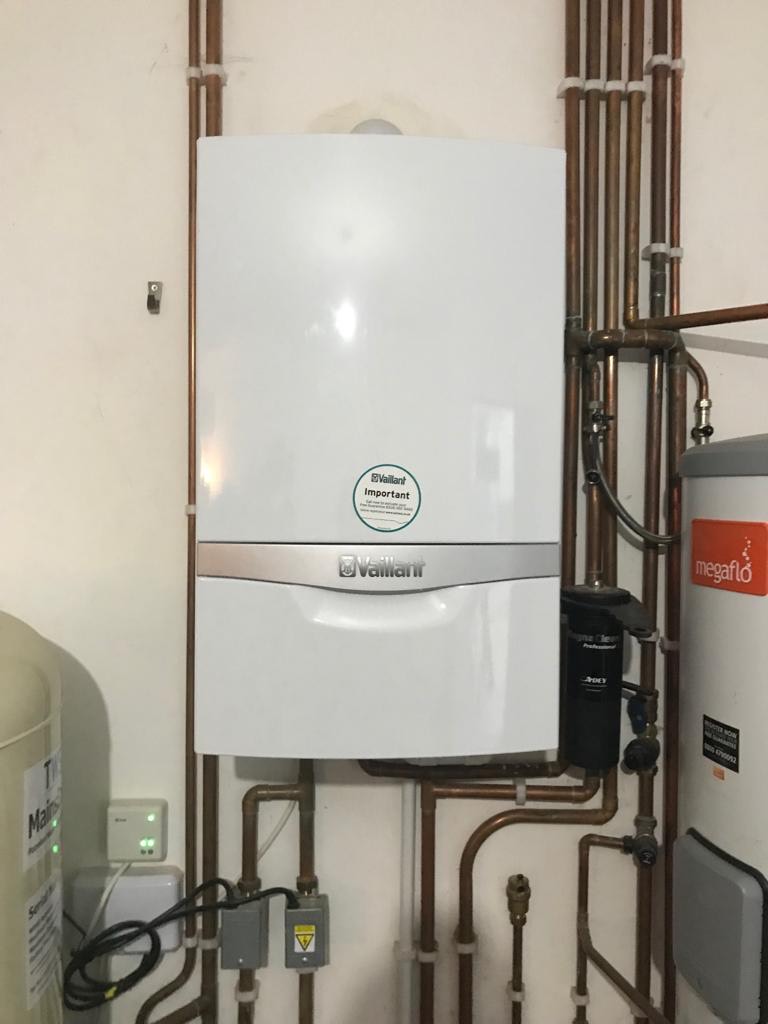
Wall-hung gas boiler
The most common choice. A modern wall-hung boiler takes a fraction of the space and can often go in the same room, a cupboard or the loft. Floor-standing gas boilers are now rare.
Floor-standing oil boiler
For oil-heated homes, floor-standing condensing boilers are still widely available, as are external models that move the boiler outside altogether.
Convert to a combi
If you have one or two bathrooms and good mains pressure, you could also remove the cylinder and loft tanks. See converting to a combi.
What's involved
- Removing the old boiler and making good the floor and wall
- A new flue route. Old open or chimney flues usually can't be reused, and sometimes a flue liner is needed.
- Re-routing pipework to the new position
- A thorough system clean. Old cast-iron systems often hold a lot of sludge.
For a real example, see how we replaced a 62-year-old floor-standing boiler in a Harlow farmhouse.