
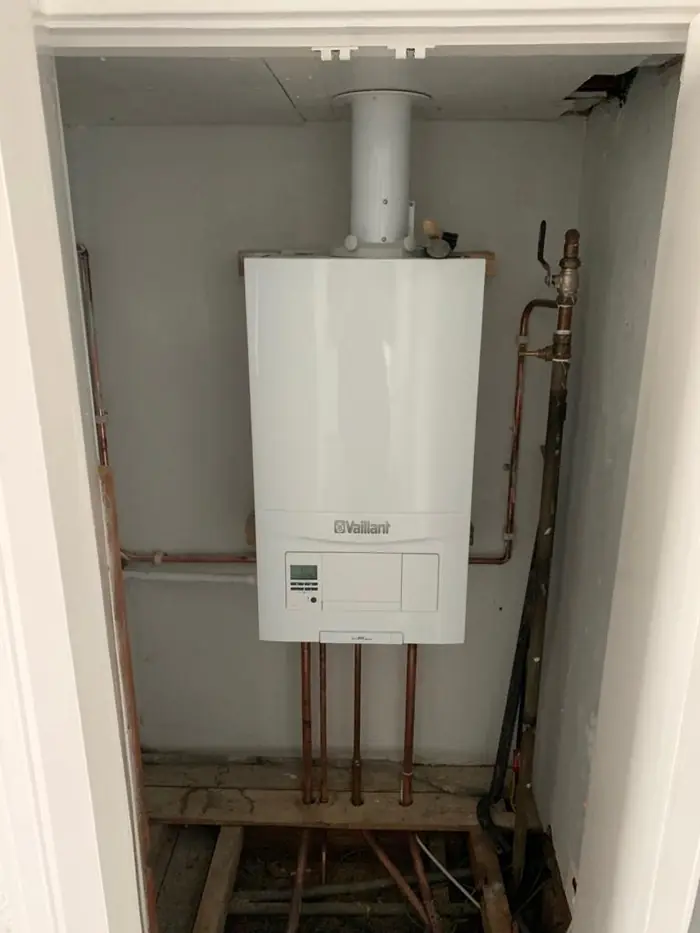
How it works
Burning gas or oil produces hot exhaust containing water vapour. A condensing boiler passes this exhaust over a larger heat exchanger. Water returning from your radiators cools the exhaust until the vapour condenses, releasing extra heat back into the system. The leftover water (condensate) drains away through a plastic pipe.
Condensing vs non-condensing
| Non-condensing (older) | Condensing (modern) | |
|---|---|---|
| Typical efficiency | Often 70–80% or lower with age | Around 90%+ when condensing |
| Flue | Hot exhaust, little visible plume | Cooler exhaust, visible white plume |
| Condensate pipe | No | Yes |
| Still installed? | No, new gas boilers must be condensing | Yes, the standard since the mid-2000s |
If your boiler doesn't have a plastic condensate pipe, it's probably a non-condensing model, and replacing it could make a noticeable difference to your bills.
Getting the most from a condensing boiler
A condensing boiler only condenses when the water returning to it is cool enough, roughly below 55°C. If your radiators run very hot, it may hardly condense at all. Lowering the flow temperature and using weather compensation or modulating controls keeps it in condensing mode for longer.
The condensate pipe in winter
The condensate pipe can freeze in very cold weather, causing a lockout. Thaw it with warm (not boiling) water. Good installation, with the pipe routed internally where possible or correctly sized and insulated outside, reduces the risk.
Oil boilers too
Modern oil boilers are condensing too, with similar efficiency gains. See oil boiler installation.